▶ Industry Trends:
• The focus has shifted to 'operation and maintenance,' with the industry moving from 'construction-led' to 'value-added operation,' and new models such as preventive maintenance and long-term service contracts have emerged
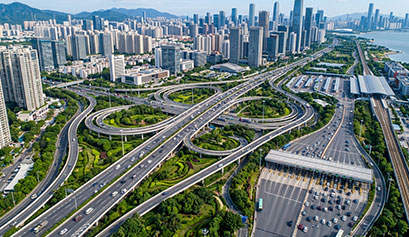
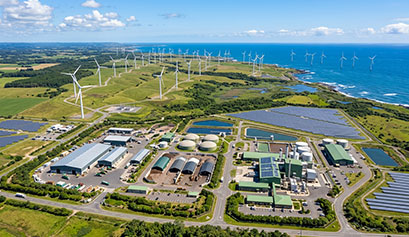
• 'Highway' integration model deepening: in-depth integration of highways with tourism, industry, energy, industrial parks, etc., such as 'transportation energy' photovoltaic sound barriers, expanding the functions and value of highways
Vertical integration of the industrial chain: Leading enterprises extend to upstream and downstream areas such as planning, design, material production, and operation and maintenance, building full industrial chain service capabilities.
• Smart highways are becoming a growth engine, with technologies such as vehicle-road coordination, 5G Beidou, digital twin road networks, and AI risk warnings accelerating implementation, aiming to improve traffic efficiency and safety. For example, some provinces have already built a provincial digital twin platform for highways to optimize traffic flow.
• Maintenance has entered the intelligent prevention stage, using technologies such as drones, 3D laser scanning, and big data disease prediction, promoting the transformation of maintenance from 'emergency repair' to 'preventive maintenance'
▶ Main Challenges:
• Local finances are under pressure, and the traditional infrastructure investment model is difficult to sustain
• Complex project implementation is difficult. Construction in mountainous areas, karst regions, and other complex geological and topographical conditions is technically challenging, has high safety risks, and is difficult to manage.
• Barriers to the implementation of new technology: the application of intelligent equipment and new materials faces challenges such as lagging standards, insufficient worker skills, and equipment compatibility, which increase the initial promotion costs and risks
• Safety supervision challenges, expansion of road network scale, traditional supervision methods are difficult to achieve real-time warnings and dynamic responses for complex road conditions
 +8618165703642


 Online Consultation



 Phone
Phone

 WeChat


 Consult