At present, China's medical and health undertakings are at a critical stage of development, transitioning from scale expansion to quality improvement and efficiency enhancement. As the most complex category of civil buildings, hospital buildings are facing three major core trends and challenges:
Under the background of large-scale infrastructure construction, hospital construction projects generally have short cycles and are eager to start operations. The focus on 'heavy construction, light operation' leads to a vicious cycle of 'renovation upon delivery'.
Hospitals cover complex electromechanical systems such as medical special projects, medical gases, logistics transmission, radiation protection, and intelligence, which are difficult for conventional supervision to achieve in-depth coverage of specialized areas.
Any defects in hospital buildings (such as power failures or inadequate infection control) directly threaten patients' lives, and the requirement for 'zero health risk' in buildings is much higher than that for ordinary public buildings.
It is difficult to intervene during the construction process, and the cost of rework and renovation after completion is extremely high.
The quality of concealed works is poor, seriously affecting the routine diagnosis and treatment.
Problems such as incorrect installation of medical gas and failure of power switching can, in severe cases, endanger patients' lives.
It is difficult to fully staff hospital general engineering personnel with the necessary specialties, and there is a lack of cross-disciplinary in-depth verification capabilities.
Construction and hospital reception operations were delayed due to disputes during the handover.
Concealed engineering materials are prone to being of inferior quality, construction processes are easily lacking, and later maintenance requires huge investment.
Hospitals are crowded with staff, and various malfunctions and defects affect medical satisfaction.
There is a lack of unified, precise hospital inspection standards, and assessments are mostly based on experience.
Medical 'building doctor' and chief third-party risk management consultant.
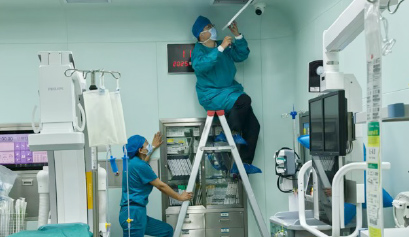
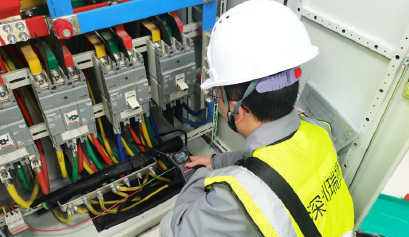
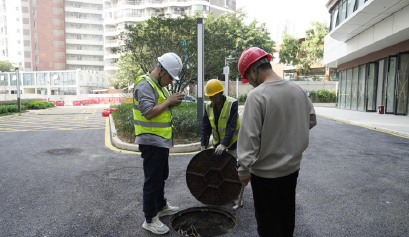
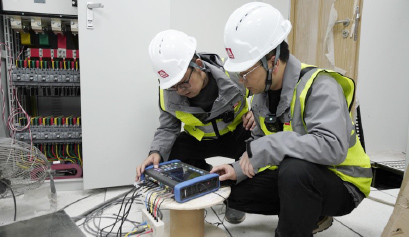
The Ruijie solution is based on the logic of 'standard guidance, cross-professional integration, and digital closure.' It deeply applies national standards and documents such as the "Technical Guidelines for Owner Acceptance Evaluation of New (Rebuilt or Expanded) Hospitals." Through a 'building doctor'-style examination, hospital inspections are divided into 15 professional dimensions, including civil engineering systems, finishing systems, curtain wall systems, high-voltage power systems, plumbing systems, HVAC systems, fire protection systems, intelligent systems, elevator systems, medical gas systems, logistics systems, purification engineering systems, radiation protection engineering systems, laboratory systems, and hospital infection control system evaluation. Using self-developed digital systems, AI infrared detection technology, and equipment testing, it achieves a quantitative assessment of quality risks.
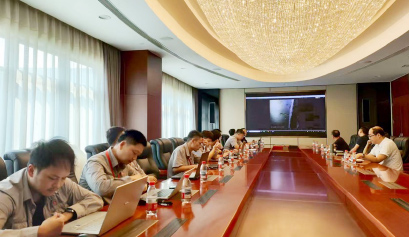
This solution provides full life-cycle product collaboration for large-scale hospital infrastructure projects. Before delivery, it conducts a comprehensive 'carpet-style' inspection, covering civil engineering, HVAC, medical gas, and clean engineering. During the commissioning phase, it provides consulting services for key electromechanical system performance verification and joint commissioning. Through the 'Ruijie Risk Inspection Platform,' 6,800 types of on-site issues are recorded into digital archives, achieving 100% localization of hidden risks and 100% visualization of rectification milestones. The solution not only identifies 'surface defects' but also deeply uncovers hidden issues affecting safe operation at the 'structural and network' level, helping hospitals achieve high-quality, zero-distance, and seamless operational takeover.
Core products, conducting comprehensive assessments across 15 specialties according to standards
Conduct engineering functional limit testing for medical air, high-end decoration electromechanical systems, UPS, etc.
Conduct a comprehensive safety 'check-up' and property performance assessment for existing or newly acquired hospitals